It is widely believed that you need a cockerel (male chicken) so that the hens lay eggs. This is not the case. Hens will continue to lay eggs in the absences of cockerels and will even be in better general health!
So why keep a cockerel?
Whilst unnecessary for egg production, cockerels nonetheless do play a small role. Once a male chicken has matured and got through his teenage years (!), he will take care of his hens. He will call them over if he finds a tastey morcel to eat and even let them eat it. He will also keep an eye out for danger – you may notice he keeps his head tilted to one side, thus allowing him to watch the sky and the ground at the same time. This is one major benefit of prey animals having eyes on the sides of their heads – it gives them almost 360° visibility. (Predator animals have their eyes positioned on the front of their head.)
An obvious role is that he will fertilise the eggs. He will dance for his hens before mating, by putting the offside wing down to the ground and walk (or stumble!) around in a circle before mounting her. He will likely mate with each of his hens 2 to 3 times a day.
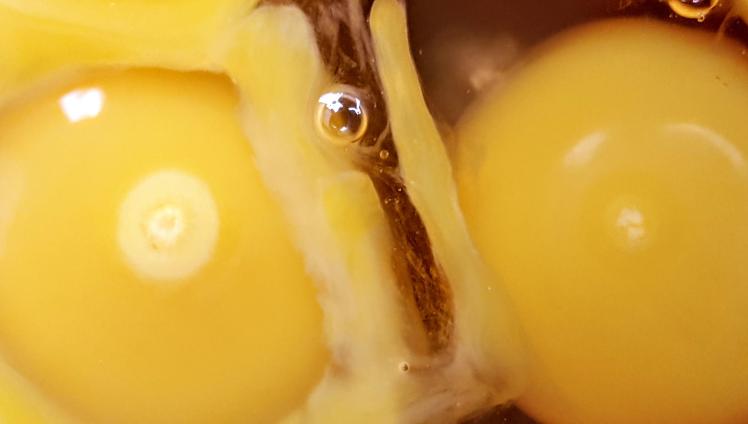
A fertilised egg is still edible and is no different to an unfertilised egg as far as human consumption is concerned. On a side note, make sure you collect the eggs very regularly as you will surely want to avoid eggs being incubated even 24 hours prior to eating them. 24 hours is enough time for an embryo to start forming on the blastodisc of a fertilised egg. After 48 hours veins will start to grow. I am certain you wouldn’t want that on your plate!

Another reason to keep a cockerel is if you want to be woken up by him crowing in the morning…and the afternoon…and the evening…and even on bright moonlit nights! Check you are allowed to keep one if you live in a town first.
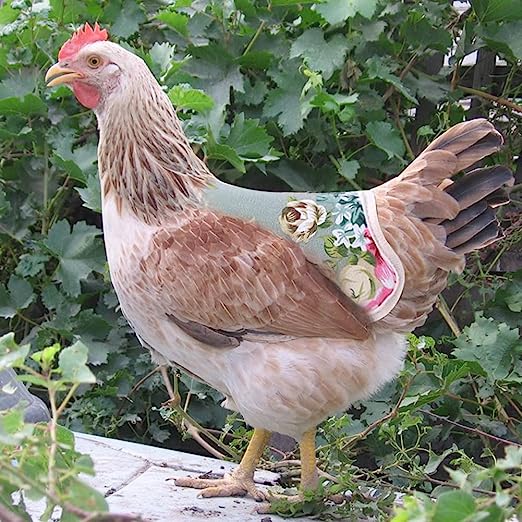
A major downside of keeping a cockerel is the damage he can cause to his favourite hens. An over amourous cockerel may mate with his “favourite” hen several times a day and wear through her protective layer of feathers on her back faster than the other hens. If this happens, she will need a “saddle” to protect her skin from his claws and spurs. The saddle can be left on for a couple of weeks at a time, but be sure to check underneath every 2 or 3 days for the presence of insect infestation and injury caused by poorly fitted saddles. Redmite love to hide under the saddles.
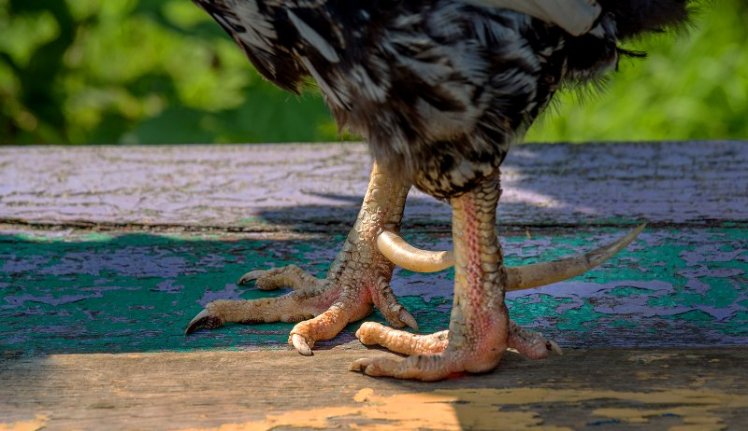
If you wish to keep a cockerel, it can certainly be fascinating watching him go about his business of caring for his girls. I would advise changing the cockerel every two to three years, when his spurs get too long. They can be trimmed safely but only so far, same as a dog’s claws. The spurs cannot be removed despite popular belief – the “hot potato” method recommended by some simply removes the outer layer of the spur, leaving the root (and nerves) exposed. This is very painful for the bird and must be avoided at all costs.
The other option is to separate him from his hens after the Spring or when the feathers are worn down too far. He can go back to them in early Winter. Either way, very regular observation on the hens is necessary to avoid injury.
It is for this reason only that I do not personally condone keeping a cockerel, purely for the safety of the hens.
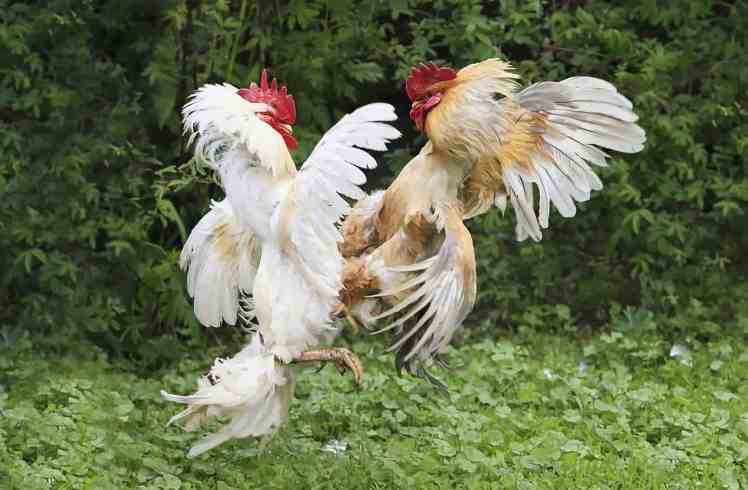
If you have an aggressive cockerel, which can happen on occasion, there is one solution, ending in a hot oven! Aggressive behaviour cannot be tolerated as you can never turn your back on the chicken. He will ruin your enjoyment of chicken keeping in the end. I speak from experience – one year I had a very poor hatch where only one chick survived. This chick grew up to be a handsome young cock bird who I named Hope. He was allowed in the house and when he joined the older birds at 5 months’ old, within a matter of weeks he turned very aggressive. Wyandottes don’t fly well so my face was never at risk from his beak and claws, but after persevering and trying out different techniques to correct his behaviour (from scaring him off with a stick to walking around with him under my arm every time I went into the enclosure and hand feeding him), I admitted defeat. I can say that at 8 months of age he tasted very nice, but I would have preferred to keep him as a breeding bird as he was stunning. Such is life and so I learned and moved on.
En savoir plus sur Maman Poule
Abonnez-vous pour recevoir les derniers articles par e-mail.
 Maman Poule
3 réflexions sur “Cockerels: Care Tips for Backyard Chicken Owners”