In the wild, poultry lay eggs for reproduction as you might imagine, the same as wild birds such as crows, pigeons and sparrows. This means that chickens will likely lay up to 13 eggs before incubating them for 21 days.
Since poultry has been kept as livestock, they have been bred to produce eggs on virtually a daily basis as well as supplying meat. Some breeds of chicken, including hybrids, can lay up to 300 eggs per year. This is well over the necessary amount for reproduction. However, most pure breeds will lay around 250 eggs per year assuming that the conditions are right.
This excess of eggs is great news for us, as that is mostly what we are interested in. This also means that if the eggs aren’t collected very regularly, they will sit around waiting for something to happen to them. This could either mean that a chicken will go “broody” (wanting to sit on them to hatch them), or they get eaten by other wildlife such as corvids like crows and rooks, or even hedgehogs and rats. The other likely suspect can also be chickens.
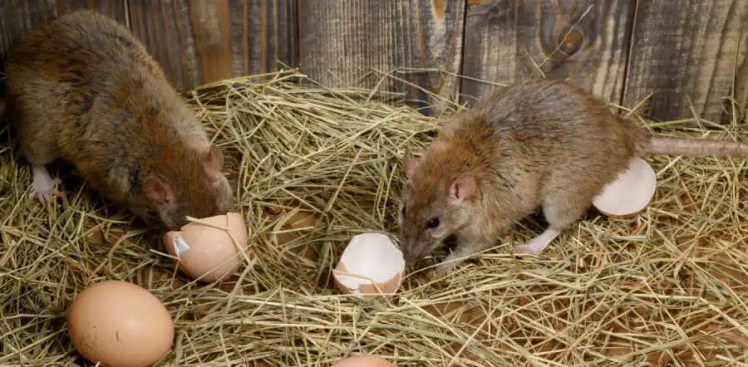
How does the habit start off?
Eggs must be collected at least once a day and not necessarily first thing in the morning. A chicken’s reproductive cycle is around 26 hours which means that the eggs aren’t always ready for collection during your morning routine. It could be anytime of day, but daytime it will be as opposed to night-time. This is because during the dark hours of night, their metabolism slows down much like ours does. The lack of light is the cause, thus ensuring that eggs are laid during daylight hours.
Egg eating itself is a very bad habit for a chicken, mainly because it is counter productive to keeping chickens! It is notoriously hard to break the habit and requires much diligence and trickery on our part.
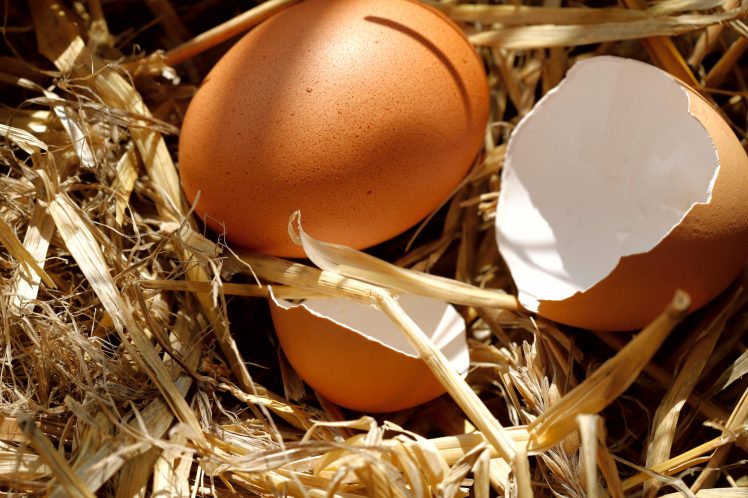
A chicken that eggs either its own eggs or other hens’ eggs can “spread the word”, encouraging others to do the same. This is bad news! Breaking the habit, once identified, should be top priority. To be sure the hen is egg eating, as opposed to other causes for disappearing eggs, it is easy to spot. She will either hang around the hen house waiting for an egg to be laid, or more likely, will have traces of egg yolk on her beak.

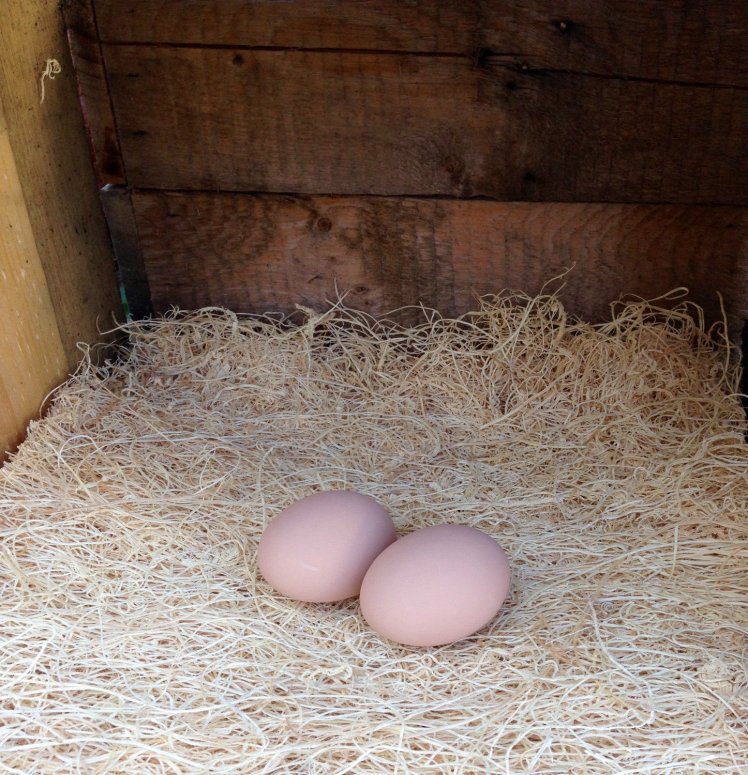
In extreme cases people have been known to separate the culprit whilst the habit is being broken, but this likely unnecessary if the problem should arise. It is usually enough to leave some fake or crock eggs in the nest boxes. Fake eggs can be purchases online easily enough, although golf balls will suffice. If you have neither, just hard boil a couple of eggs.
The idea is that the fake eggs left in the nest boxes are impossibly to crack, so the hen gives up. This may take a couple of weeks or more, depending on how consistent you are leaving the crock eggs and collecting the real ones. It also depends on how persistent the hen is.
The worst possible scenario, as a last option, is to leave out a real egg that is several months’ old. If the egg is pecked, it usually explodes in the face of the culprit. The explosion is caused by the egg rotting inside the shell and the smell should be enough to put off the hen forever! The obvious downside is forward planning and the following mess.
Once the habit is finally broken, remember the golden rule…check for eggs at least 2-3 times a day depending on how many birds you have and how they are kept. If you have a small flock of 4-6 birds its easy enough to see how many eggs have been laid compared to the number of chickens in lay. If you have 100 birds kept in a building, this changes things and demands far more diligence.
On a side note, if you wish to know if a hen has laid an egg recently, there is a way to tell. You can measure the distance of the bones of her pelvis either side of the vent. If the bones are only a finger’s width apart, she hasn’t recently laid. If they are 2 fingers or more apart, she has laid in the last few hours. This rule applies to large fowl birds. For bantams you will need to adjust these measurements by around half.
I have taken the liberty of adding a handy link to Amazon if you prefer to purchase fake eggs.

They come in handy too if you wish to try encouraging broody hens or have trouble with pullets not laying eggs where they should!
En savoir plus sur Maman Poule
Abonnez-vous pour recevoir les derniers articles par e-mail.
 Maman Poule
Une réflexion sur “Egg Eating”