This is such a large topic, I have deliberately put off writing about it! There are so many options out there to help chicken owners, not all of which are terribly effective. Some however, in my humble opinion, should be in every poultry owners arsenal. Having said that, I have found that no one product or treatment produces 100% results…a combination of at least two preventatives is advised.
I have chosen in this article to share with you what I found worked for me and my set-up. Everyone has their own opinion and solution for what works, but hopefully you will find something of use in this list. I would certainly be grateful if you care to share your own solution to the dreaded redmite invasions most poultry owners suffer at least once or twice in their time – for a lot of us, its an annual ritual to start keeping an eye out for the nasty little critters from around June.
But first, to equip ourselves knowledge is key – a better understanding of redmite can never hurt and I apologise if I am teaching to those already in the know!
What are redmite?
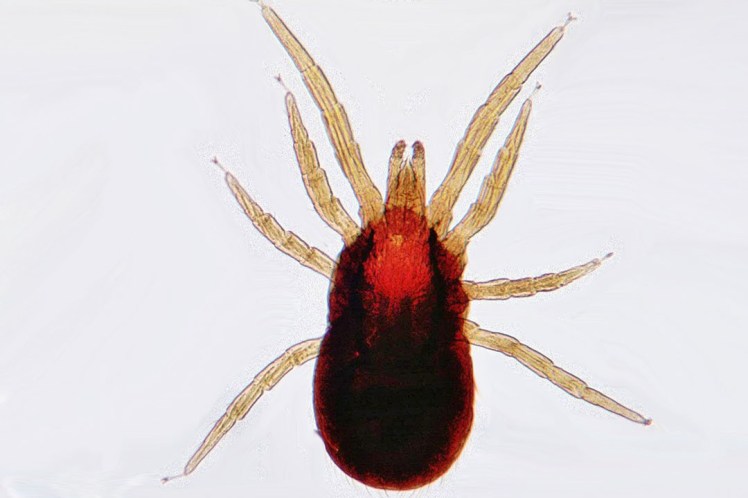
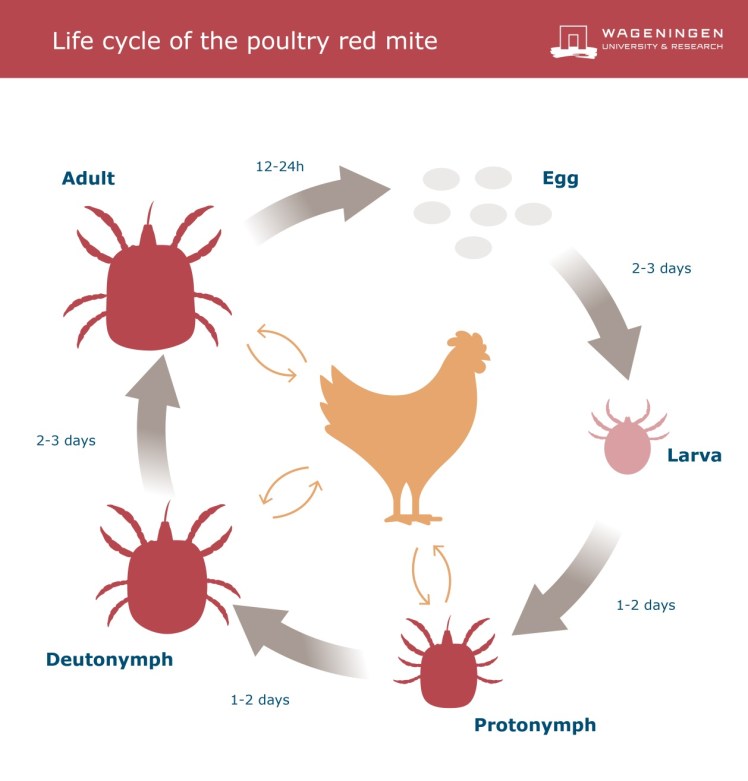
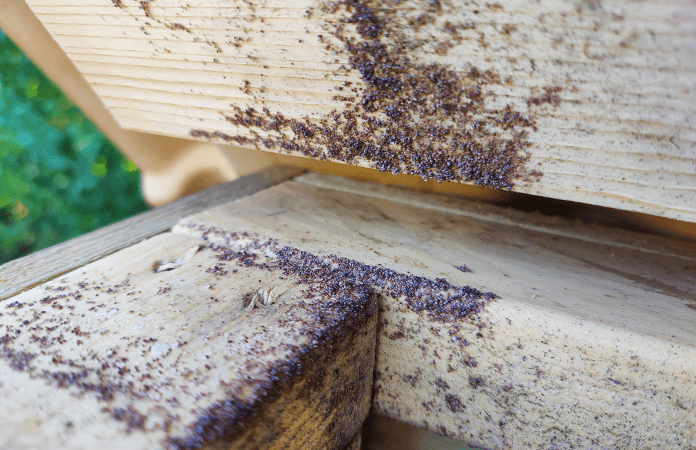
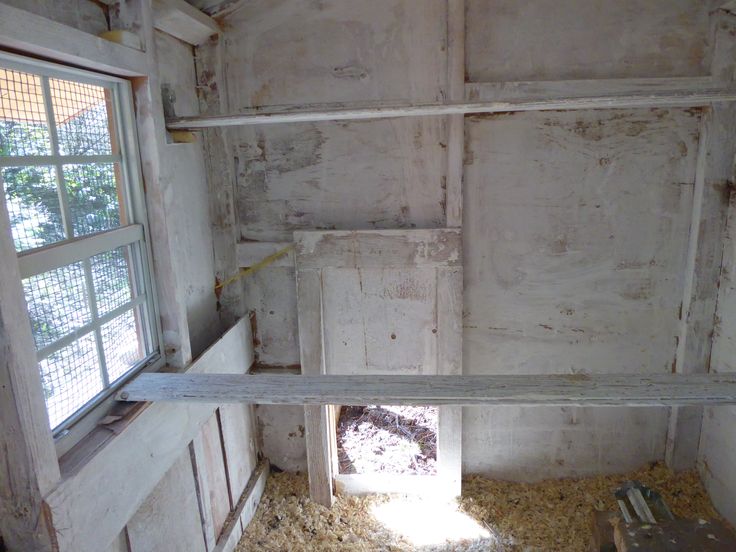
The redmite is actually a type of arachnid – they have 8 legs just like any other spider. It is a myth that they live on their host, they do not and nor are they a parasite. Redmite actually hide from the daylight in the dark corners of the henhouse, such as under the litter or in the joinery – perhaps where the perches join the walls of the henhouse. They come out to feed after dark and reproduce every 7 days, at an alarming rate. It is for this reason that it is vital to catch them early, before you are overrun. Their mouths or biting parts are ill equipped to bite humans, they can only feed on birds such as chickens or wild birds like sparrows. They are lazy and can only travel up to 1-2 metres for their nighttime snack. Their favourite is to come down from the roof of the henhouse, dropping on to the hens directly. The closer the better. This is an excellent example of why wild birds are so good at bringing them in to the henhouse – they can simply fall from the nearest infested tree. Something to bear in mind when choosing where to put your new hen coop!
Another source of contamination is, believe it or not, from infested wood chippings.
Whilst redmite for humans are unpleasant, causing itching – even just typing this I think I have them!! – they cannot harm us. They can however, get into our homes and onto our furniture, in our hair etc. What they cannot do is breed if they haven’t fed, just like any other living creature. This is actualy good news, as in a serious case of infestation, you could leave the henhouse empty for a year and they will just die of thirst…a bizarrely satisfying thought, perhaps?
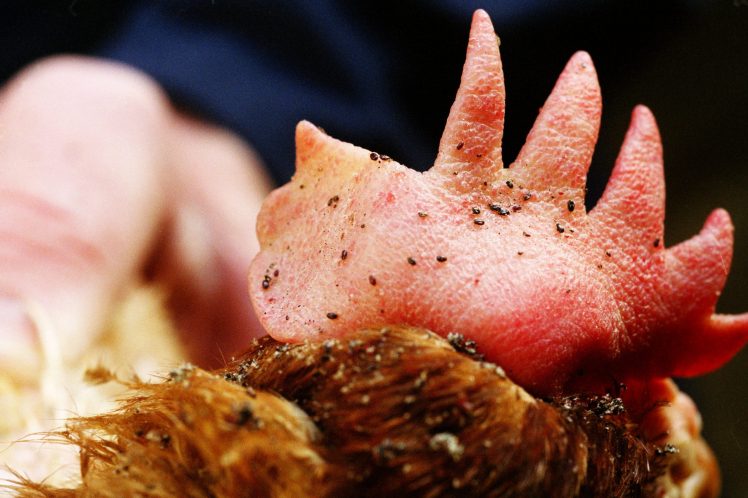
Nature’s other defense for redmite is a cold, harsh winter – a good hard series of frosts will finish them off too. Not such good news for most poultry keepers, as we cannot wait that long and our birds certainly can not. Redmite can kill chickens over time, usually by heart attach from lack of blood – this takes weeks and there are signs such as a very pale comb and listlessness. Any responsible poulty owner would notice this long before death occurred, or so I hope anyway.
Redmite when they have fed on blood are red instead of grey
Are redmite dangerous?
So what can we do to keep these nasty insects at bay? Well, aside from time and the weather, nature does nicely provide a solution in flowers. The tansy flower is said to help keep them at bay – I cannot attest to this however, as I did not try it in my poultry keeping days. It would make the poultry runs more attractive but I wonder at the efficacy of the flower if kept within reach of the passing hen – it may risk being eaten or dug up, I feel!
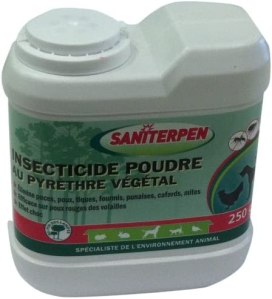
Going backwards on my list of go-to treatments, permthryin is a natural pesticide and readily available in farmshops and online – even Amazon. A heavy dose of powder puffed everywhere in the henhouse and on the hens themselves will provide a small level of protection.
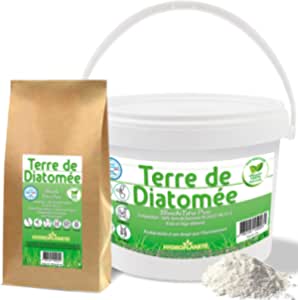
Good old reliable diatomaceous earth is excellent – you can put it everywhere and it will satisfying lacerate any mite or louse it comes into contact with. Its great for putting outside too in the dustbath or even making it into a spray – just make sure it does all the way down the feathers and onto their skin, where the redmite bite.
A word of caution – be especially observant of your hens during an infestation! If a redmite gets in their ear, it can cause a nasty infection and if left untreated, a painful way to die. It is actually possible to check their ears for yellow discharge by gently pushing the tiny feathers in the opposite direction.
Ridding the henhouse of redmite is a battle not a skirmish!
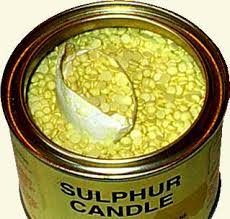
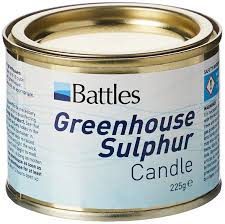
My main rock-solid hit-em-hard solution is the sulfur candle. This is very little known in France so I hope this brings you a ray of hope in your desperation to find a quick solution – this is the one you have been waiting for! Check on Amazon here and see for yourself what they’re all about! In brief, the sulfur candle is just that – a candle that when lit, produces highly toxic fumes, killing anything that is forced to breath it, large or small.
To use the candle, remove all bedding/litter from the henhouse and burn straight away.
If the henhouse is made of wood, use a rooftile or something that will not burn such as a tile or an ovenproof dish.
Ensure the henhouse is empty of poultry and they are safely relocated for at least 24 hours
Close all ventilation and seal any gaps that air might get in, including around the keeper’s door, or around the roof.
Before closing the house up entirely, light the candle using the provided taper and make sure it stays lit – they flame is very hard to see so double check – if its lit your nose will tell you with the acrid, toxic smoke.
Close the house and check no smoke is escaping from anywhere around the house.
Leave the house closed for 24 hours and enjoy the satisfaction of killing thousands of redmite – you will note that if you check on the house before you go to bed that night, they are swarming out of the house trying to escape. This is your chance to spray them with whatever you have to hand, whether it is a powder, a spray or even a limewash paint.
After 24 hours fully air the henhouse then put in fresh bedding – make sure you have not cross contaminated using the same gloves, clothes, tools etc to do this. This could render the entire operation a waste of time!
The hens can safely return to the house when you can only faintly smell sulfur.
Exholt seems to be the current favourite, making the blood of the birds deadly to redmite. If they die, they cannot reproduce and thus eventually their numbers dwindle. A small victory but a victory nonetheless!
Another product only available in the UK, and sadly has since been made only available to farmers, is creosote. It is a type of tar for treating wood such as fenceposts that is very bad for the environment – also very bad for redmite if you can find it!
If you keep your birds in a stone building, do not despair. Limewash can be painted onto to the walls year after year – it is very effective at killing the little beasties!
A parting gift: if you see earwigs in the henhouse, they are a natural predator of redmite! I thought that would make you smile!!
En savoir plus sur Maman Poule
Abonnez-vous pour recevoir les derniers articles par e-mail.




 Maman Poule
6 réflexions sur “How to Effectively Manage Red Mite in Your Coop”