As a chicken keeper, you will certainly have noticed that your flock has character, especially as individuals but as a group too! One problem you may have had the pleasure of experiencing is hens roosting in the nest box, or perhaps even on top of the henhouse. This is especially noticeable when they first arrive in their new home.
Let’s have a look together at the above problems one by one.
Roosting outside of the henhouse
A very common issue with new birds freshly introduced to the henhouse, this problem arises when the new arrivals don’t yet know where they are expected to sleep. The natural instinct of chickens is to roost high up, the higher the better. If they can access the top of a fence, a tree or the top of the henhouse then that’s perfect. However if its raining, snowing or windy this is an issue that must be addressed quickly – even in good weather it is unwise to let them continue as they won’t benefit from the added protection against predators.

I sold two Wyandotte pullets to a lady once, who then came back for two more pullets in the middle of Winter. It transpired that she let her birds roost outside at night – we had recently had a snow storm and strong winds (I remember because we had to chop the top of a tree down to rescue our cat who was stuck at the top!). The initial two pullets had died from the bad weather, sadly. I asked her what she planned to do with the new pullets – with a shrug of the shoulders, I refused the sale and she left empty handed.
On many occassion I have had to contend with stubborn chickens insisting that their choice of roost is better than the one on offer. I sometimes question their intelligence – they just look at me with disdain, as if I know nothing and they reign supreme!! Rather like the way a cat looks at you…!
New arrivals, if at all possible, should always be enclosed in their new home for 24 hours (with food and water during the day only, to avoid droppings landing where you don’t want them). This helps them in the learning process of where you want them to sleep.
After the initial 24 hour period, you can then let them out into the pen where their feeder and drinker are, helping them settle in with something familiar.
Its the following evening that roosting issues arise and where we need to be vigilant. All it takes is perserverance on our part, placing them inside the henhouse every night after dark (on the perch preferably). This may take anthing from 1 day to 2 weeks or more. Particularly stubborn birds may take even longer, but they will get there in the end! I well remember having this issue with a pair of Royal Palm turkeys that spent a few weeks on top of the henhouse – wrestling such a strong bird is a very different ball game ! And no, they didn’t sleep in the henhouse but rather in a stone building attached to the main run.
I discovered, after we moved the turkeys on, that it is inadvisable to allow them to run with chickens due to a disease they can spread to them called Blackhead. This also applies letting turkeys have access land where chickens have lived. The disease kills them readily.
Roosting in the nest box
A very bad habit proudly owned by many chickens! You may even find several squeeze their way into one nest box at a time. This is problematique, not only because of the faeces left in their wake, but because they are easier prey to insect infestations and dirty bottoms. This in turn could lead to having to give them a bath to avoid flystrike in the summer.
Whilst highly amusing to see them squashed in like so many sardines in a tin, it is wise to correct their behaviour.
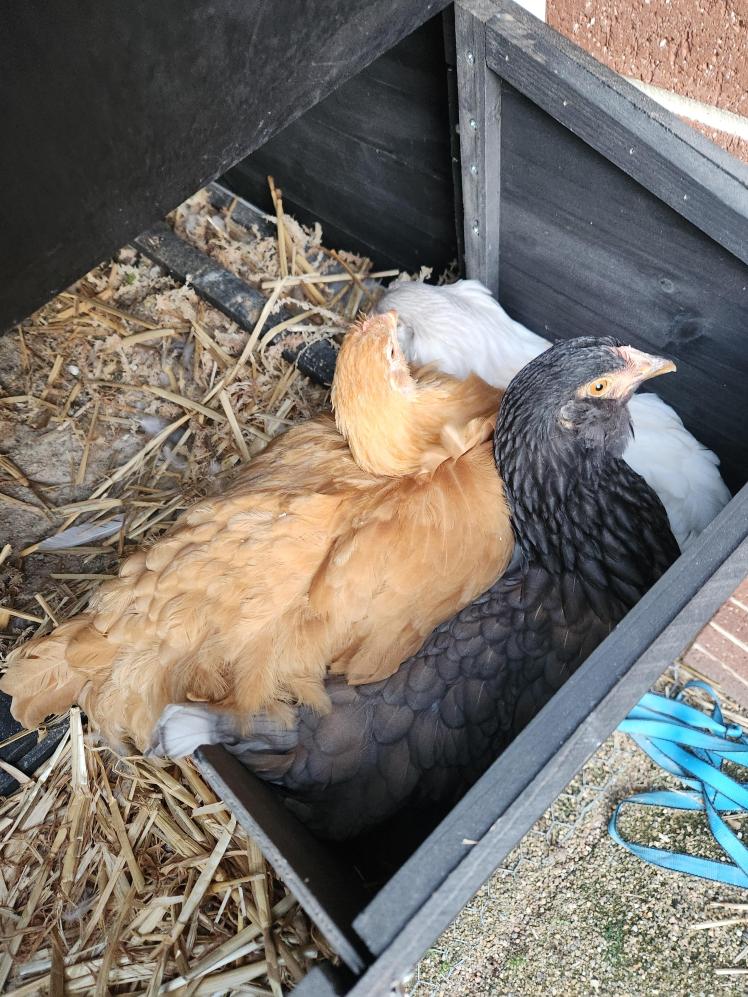
Removing them from the nest box and putting them on the perch every evening will be necessary – this may take up to 6 weeks for the worst offenders. Stick with it as one day they will get the hang of it.
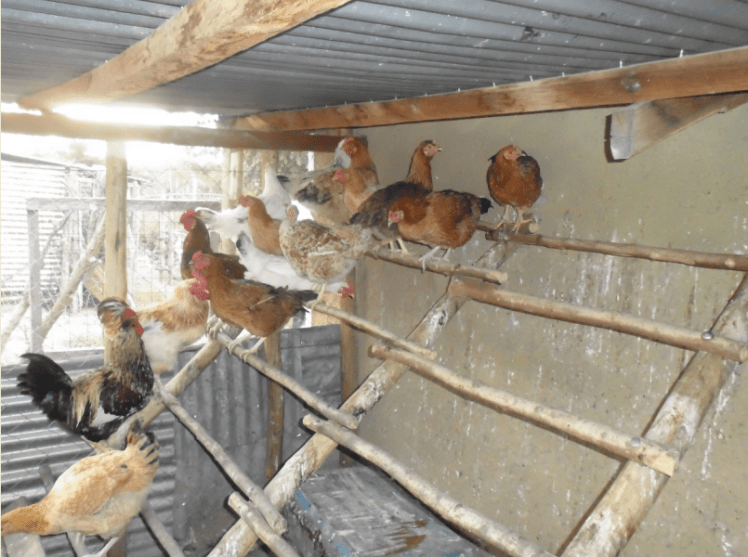
However this assumes that the perches are within their reach and ability to get up on to. If the perches are too high, they simply won’t be able to reach them. They should ideally be between 20-40cm off the ground (less is fine) for large fowl chickens. Perches should be around 1-2cm in diameter to be considered to be comfortable, with no protrusions to cut into their feet. Rounding off the sharp corners is a good idea too. Wide, homemade perches, measuring 3cm or more can also cause discomfort, as can very thin perches (not to mention breaking under the strain of so many chickens). Remember to place plenty of bedding underneath the perch to facilitate cleaning and softer landings when they come down.
Perches at different heights is also an interesting idea, giving more options and enticing them to investigate.
If, after weeks of repeated roosting in the nest boxes, they still don’t get the right idea – block access to the nestboxes at the end of the day, when all the hens have laid. A simple piece of wood or a removeable grill will do the trick. Anything to block access. This system is equally useful for breaking broodies so keep hold of it!
Nestbox-aversion
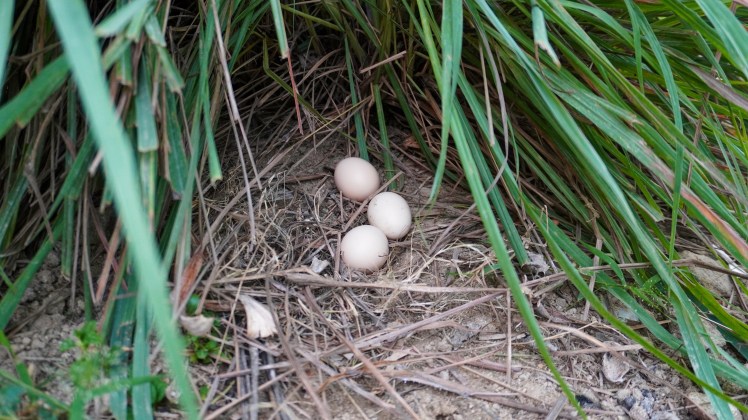
Lastly, a very common stubborn behaviour is hens or pullets not laying their eggs in the nestboxes. An enticing bush in the garden may seem like a much better place to leave one’s eggs! Everyone knows that, don’t they?!!
When this issue arises, not a great deal can be done except to leave fake or crock eggs in the nestboxes for a few days and make the nest in the bush far less inviting (destroying it is the best way). She will soon get the notion that you want her to leave her precious eggs in the nestbox. If she doesn’t, don’t let her out until she has laid an egg (assuming she lays in the first half of the day, which admittadly isn’t always the case).
En savoir plus sur Maman Poule
Abonnez-vous pour recevoir les derniers articles par e-mail.
 Maman Poule
Une réflexion sur “Why Chickens Roost Outside and How to Prevent It”