Some of the jargon used in relation to poultry can sound like a foreign language, so here’s a little guide to help you!
General terminology
- Chick = a baby chicken that still requires a heat source (about 6 weeks old)
- Grower = a young chicken not yet reached adulthood but not a chick either
- Broiler = chickens raised primarily for meat – they usually go off their legs around 15 weeks old as they gain weight quickly for the table. Their legs can’t keep up with this accelerated growth.
- Pullet = a female chicken that has not yet had her first adult moult (usually around 12 months’ old)
- Cockerel = a male chicken that has not yet had his first moult
- Hen = an adult female chicken
- Layer = a hen primarily raised for her egg-laying performance
- Capon = a chemically castrated male chicken raised for meat (nb. this practice is illegal in certain countries such as the UK)
- Cock = an adult male chicken
- Broody = a pullet or hen that wants to incubate eggs. Some breeds are prone to this and all are capable!
Breed related terminology
- Hatching eggs = fertilised chicken eggs sold for incubation and hatching chicks
- Hard-feathered = a chicken with feathers that follow closely its body such as the Old English Game. The feathers are closely webbed.
- Soft-feathered = fluffy-looking chickens such as the Cochin or the Brahma.
- Frizzle = a breed of chicken with curled or frizzled plumage. They cannot be out in the rain as their feathers don’t protect them from the water.
- Sizzle = a Silkie Frizzle!
- Split wing = a chicken’s wing that has a gap in it. The first ten feathers are flight feathers – the split wing means that either a feather is missing or it is spaced very far apart. This is usually visible even when the wing is folded. As a genetic default, the chicken should not be used or bred for showing. This defect does not affect the quality of life or flight of the bird to any degree.
- Large fowl = a large version of the miniature chicken eg. Sussex.
- Bantam = the miniature version of the large fowl chicken eg. Sussex (usually about a third of the size)
- Pure breed = There are several hundred pure breeds of chicken. The opposite to a pure breed is a hybrid.
- Cross breed = A first cross between two different breeds of chicken.
- Sex-link = a hybrid or crossbreed that can be sexed by colour at day-old. You can create your own sex-link by breeding together opposing colour chickens (black with white for example)
- Hybrid = A chicken that has been deliberately created for desireable assets (such as laying performance). The hybrid is technically a strain of crossbreed, although new cross breeding is required every few generations to maintain the desired assets previously mentioned.
Hybrids often have a handy sex-link gene making it easy to sex day-old chicks by colour. The parents are often opposing colours (white/black) to one another, so the result chickens are either yellow or black. The black chicks are the same sex as the black parent, the yellow chicks the same as the white parent. For example, the female chicks are the same colour as their father. Another example of sex-link is as seen below – with or without stripes.
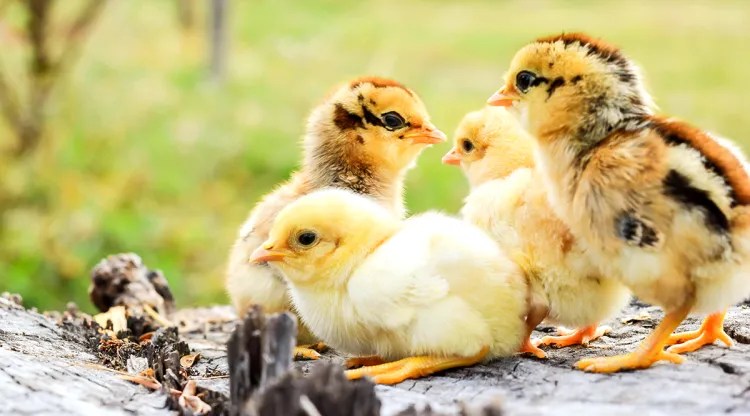
Some examples of hybrids are :
Azur (a cross between a Leghorn and an Araucana) – created for prolific laying of blue/green eggs
Plymouth Rock (a cross between Black Javas and Dominique) – used for meat and egg laying performance
Anatomical terminology
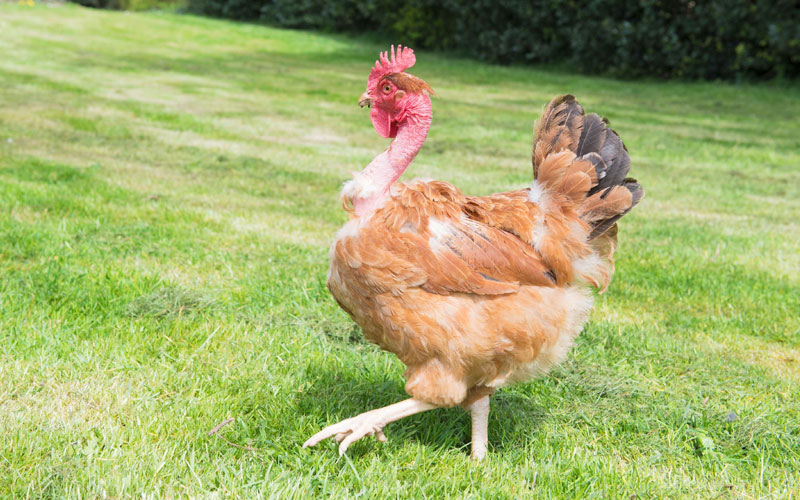
- Moult = a chicken moult 3 times before reaching adulthood, the moult refers to the adult losing its feathers and renewing them every year sometime between August and November (for the Northern hemisphere). The moult can be partial or total, usually starting from the neck and working its way down the body. Remember to try to avoid handling the birds at this time as the feather shafts can break easily and are full of blood.
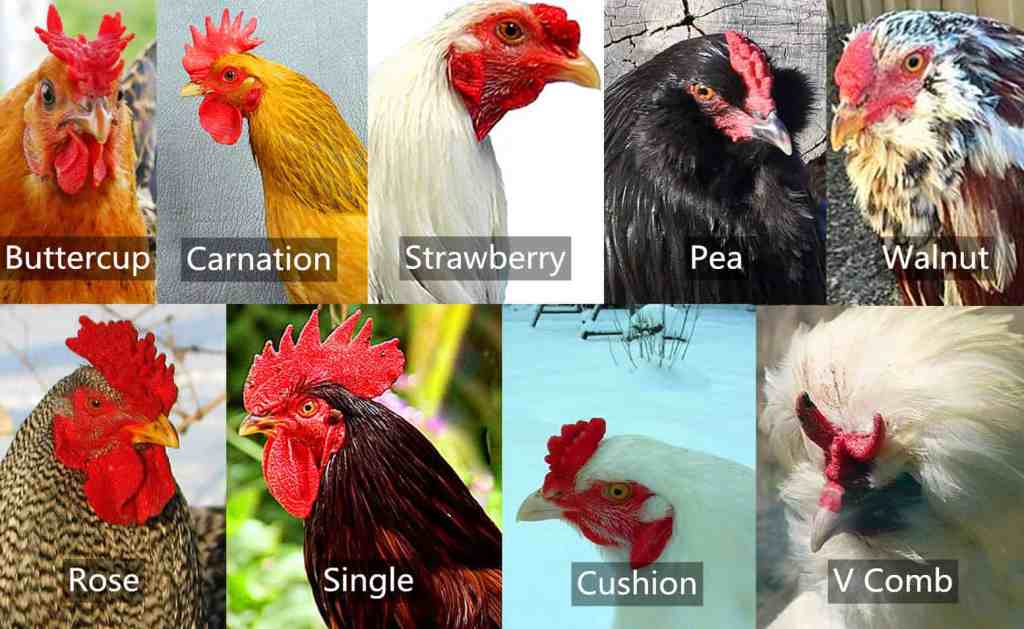
- Comb = the fleshy bit on top of the head. Most chickens have red combs, which are great indicators of health and effective at dispersing excess heat in the summer. One breed of chicken has a totally black comb, wattles, eyes, skin and feathers. Even the meat is black.
There are 9 different shapes of comb :
- Rose comb – Wyandotte
- Pea comb – Araucana
- Single comb – Marans
- Buttercup – Sicilian Buttercup
- Carnation – Empordanese + Penedesenca only
- Walnut – Silkie
- Cushion – Chanteclers (perfect for very cold weather)
- Strawberry – Malay
- V – Appenzeller Spitzhauben
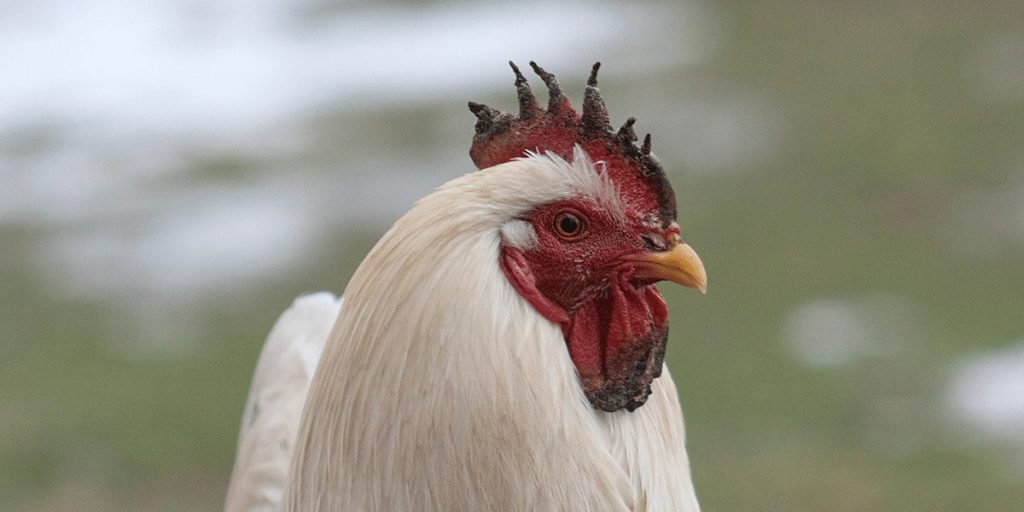
It should be noted that the comb needs protection in the winter against frostbite if especially large – if not it can start to go black. Protect them with vaseline.
- Vent = the chicken’s anus. Aside from producing faeces/urine, this is where the eggs come from!
- Wattles = the fleshy protuberences below the head at the top of the neck.
- Crest = the feathers on the head either side of the comb that stick up
- Crop = a sac located below the throat of the chicken, where the food they eat gets ground up before continuing through the digestive system
- Cloaca = see vent!
En savoir plus sur Maman Poule
Abonnez-vous pour recevoir les derniers articles par e-mail.
 Maman Poule
Une réflexion sur “Essential Poultry Terminology: A Beginner’s Guide”