So your pullets have finally come into lay? Enjoying fresh eggs all year round is a real treat, even after keeping hens for years!
You may have noticed that your hens (the 2+ years age group) have slowed down on egg production now that the days are shorter in this part of the world. This is totally normal during the darker months of the year, largely because maximum egg production requires an optimum of 12 hours of daylight. Here in France we are lucky if we get 9, but it could be a lot less!
This is a good thing for the hens as it gives them time to recover and recuperate after an intense laying season. This is the time for their reproductive cycle to take a break, putting back on any lost condition and relaxing – ‘tis the holiday season, after all!
An excellent reason to take on pullets each Autumn would be to ensure fresh eggs throughout the Winter – its also a great excuse to increase and replenish the flock. Do we really need any more reason to do so?!!
The first eggs from a young pullet are still exciting to me, and I know I am not the only one to feel this way. A fresh egg waiting to be collected from the henhouse is a delight every time, and not just for the children.
But what to do with the eggs once you have it in your hand? Do you go back into the house and store it straight away, or do you pop it in your pocket whilst you finish the chicken chores? Yup, you know what I’m getting it I think! Bending over to pick up a bucket or collecting the poop at the back of the henhouse is a bit too much to ask of the egg in your pocket…CRACK!!! An instant omelette in your pocket.
I can guarantee you we have all been there!!!!
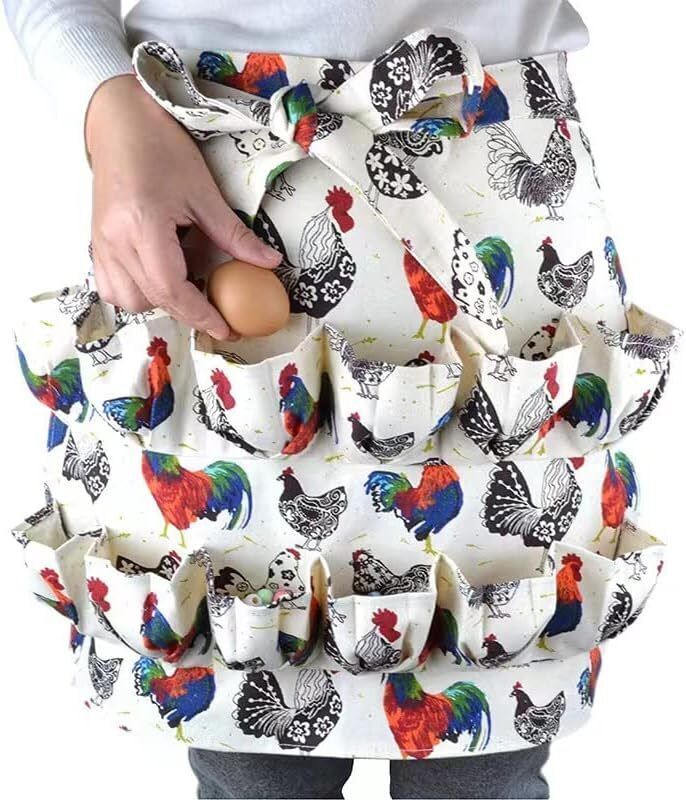
A sad event that I always tried to hide from the young pullets in case I offended them. And one egg less for breakfast at that. At least the washing machine gets something out of it, I suppose?!
Anyway, the first eggs are always exciting – with their tough shells and small, perfect shells in all kinds of exciting colours.
To wash or not to wash (the eggs)
You may find these early eggs have a little blood streaked across them, but this is nothing to worry about. Its just another sign that a pullet has started laying. You may even soon be treated to an extra large +100g egg, who knows!
If you find dirty eggs and have an uncontrolable urge to clean them, STOP!! At least let me explain why this should be done carefully – it could save an egg going pop in your fridge or making you ill, after all!
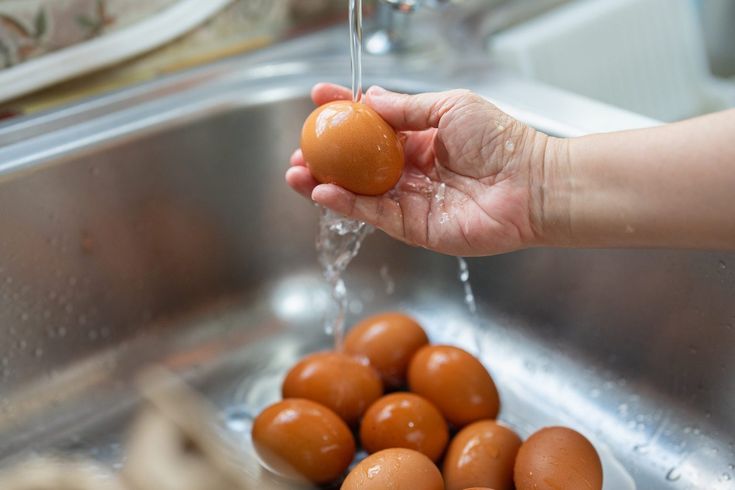
To clean a dirty eggshell, simply use a very slightly damp kitchen towel to wipe the dirt away. Using water must be avoided at all costs, especially if the water is warmer than the egg. This is because the egg shell already has a protective coating and the use of water warmer than the egg will encourage the shell to absorb the water. This invites bacteria into the egg itself, which in turn can make the egg go bad. In the worst case scenario, these eggs can literally go off like bombs after a period of time! I feel confident in saying that you wouldn’t want that in your fridge or on the kitchen counter?
If you really must wash the eggs, there are products out there for just this. Unless the eggshell is going on your plate (soft boiled eggs, for example), I have never once cleaned an egg.
You can help yourself by checking where the chickens are laying their eggs – if its a nestbox that is slept in each night, this is a great reason to educate the hens to sleep elsewhere. Its also more comfortable for them and very easy for you to clean up if all the poop is in the same place.

Egg storage
An age-old question that comes up on a very regular basis – we all have our own system for storing eggs. My mother always kept the eggs on the counter in a fancy egg holder. Bizarrely since keeping chickens she now keeps them in the fridge, even after +30 years of habit. An unexplained mystery? Not exactly!
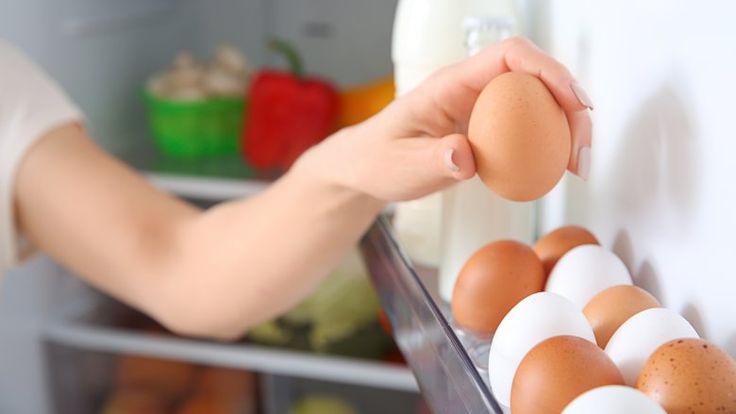
This new habit of storing her eggs in the fridge probably stems from one simple addition to the fridge itself – the famous plastic egg holder. This is an enigma in and of itself, as anything stored in the door of the fridge is renowned for not being a constant temperature, unlike the centre of the fridge. Manufacturers deemed it a good place to save space and store eggs, so we all follow suite like lemmings.
Yes I do it too – the fridge it is for me too!
As a side note, it is advisable to store the eggs pointy side down (blunt end up) – this is due to the air pocket. Read on to find out more!
But what does it really matter if its the questionable fridge door or the kitchen counter. Absolutely no difference whatsoever so far as the shelf life of the egg is concerned, believe it or not! The most important thing is that the contents of the egg remain at roughly the same temperature. For example, an egg must not be kept in the fridge and then on the kitchen counter for a few days then back in the fridge. The differences of temperature are too varied and invite condensation and thus bacteria into the egg via the shell.
The supermarket allows the consumer to choose their preferred method of egg storage – if the shops stored the eggs in the fridge between 2-4°C, we would all have to do so.
I would imagine you are now thinking about eggs laid in the middle of Winter or the height of Summer and how this might affect the egg contents. Worry not! Mother Nature has a way around everything and time is an important factor. If the eggs have been in the cold hen house (2-4°C) for days, then yes, the fridge gets to look after them. The same goes for the middle of a hot Summer, with days at +30°C.
If you collect the eggs daily this issue is entirely avoided, of course. If you go away on holiday for a few days though, think carefully about those eggs whilst you’re doing a bit of Winter skiing. A friendly neighbour is always handy to have about, especially collecting fresh eggs for you!
Egg freshness
Upon your return from holiday, you want to know how fresh the eggs are. There is a way to tell and funnily enough the only time I condone submerging the eggs (if you’re not cooking them)!
Fill up a glass jug or bowl with cold water and pop the eggs in. Very fresh eggs will sink and lay flat on the bottom. Slightly less fresh eggs will have the larger, blunt end of the egg raised off the bottom.
An egg over about a week old will lay diagonally in the water, blunt end pulling it upwards.
A stale egg (a few weeks old) will float, blunt end up.
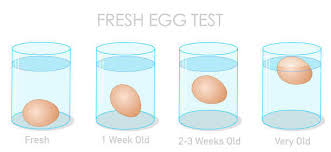
To understand this phenomenon, we need to understand how everything is placed inside the eggshell. If you have ever hatched chicks, you should already have a good understanding of this so I apologise for the repitition – skip this part of the article!
Inside the egg is the egg white and the egg yolk (see diagram). But there are two kinds of egg white, one is much thicker than the other. This is very noticeable in fresh eggs when you pop them in the frying pan. The egg yolk is also more perky, sitting up proudly in the pan! When the yolk is in the shell, surrounded by the thick egg white, there are two spiral-shaped, white coloured « stringy bits ». These act like suspension, holding the egg yolk in the centre of the egg. This is where the embryo would form if fertilised and incubated.
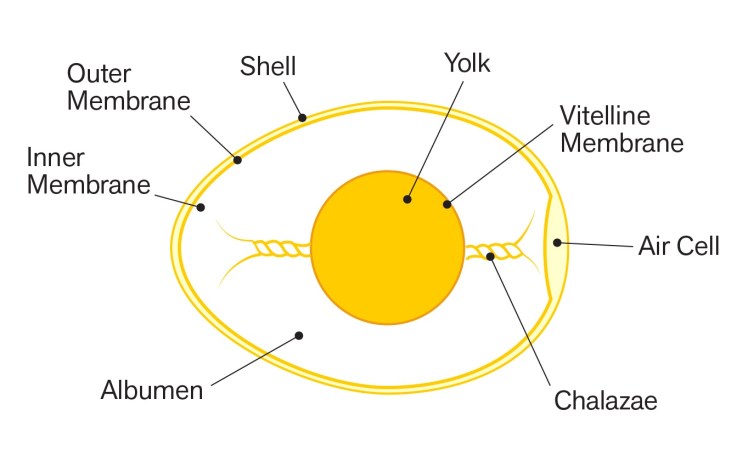
The blunt end of the egg is the air pocket. This air pocket gets bigger over time, expanding as the egg white evapourates through the porous shell. This is the reason why the egg floats more and more over time, the air pocket pulling the egg into the vertical position.
As a side note, the air pocket is there for the embryo to breathe in the last 24 hours before hatching after incubation.
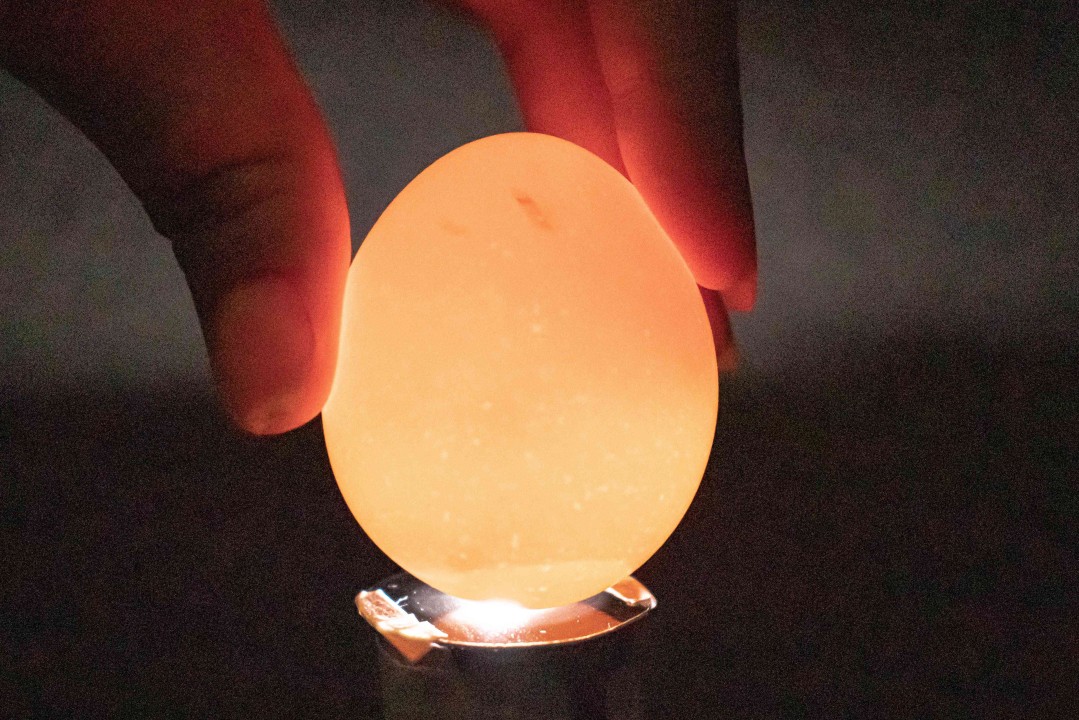
If you want to take your curiosity to the next level, grab a torch and shine it through a cardboard tube in a darkened room. Place the blunt end of the egg over the hole in the cardboard, and you will be able to see the air pocket inside the egg. Fascinating stuff! This is the same technique used when candling the eggs during incubation, we can actually see the embryo moving around in the egg.
Meat spots
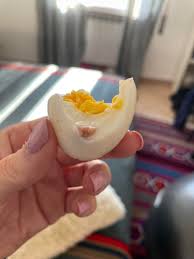
If you have ever gone to use an egg and found a brown or grey lump attached to the yolk? This can happen on occasion and doesn’t necessairly mean the egg started to develop into a chick, as many believe.
A meat spot is simply part of the reproductive system that became detached and stayed within the egg during a cycle. It is formed from pieces of tissue picked up when passing through the oviduct. Meat spots are usually found in the albumen, or egg white. You can eat the egg after removal of the meat spot with no side effects at all – although you may decide not to! Its all extra protein!
Blood spots
Essentially the same cause as a meat spot, a small amount of blood has clotted and stayed within the egg (on the yolk), but is nothing to worry about. They occur due to ruptured blood vessels in the hen’s ovaries or oviduct. It may put you off but after removal you can eat the egg as you intended.
This is not a sign of a developping embryo, which is all blood vessels for the first few days.
A bit of trivia – eggs bought from the supermarket are candled before going on sale, so you will likely never find a meat or blood spot in them.

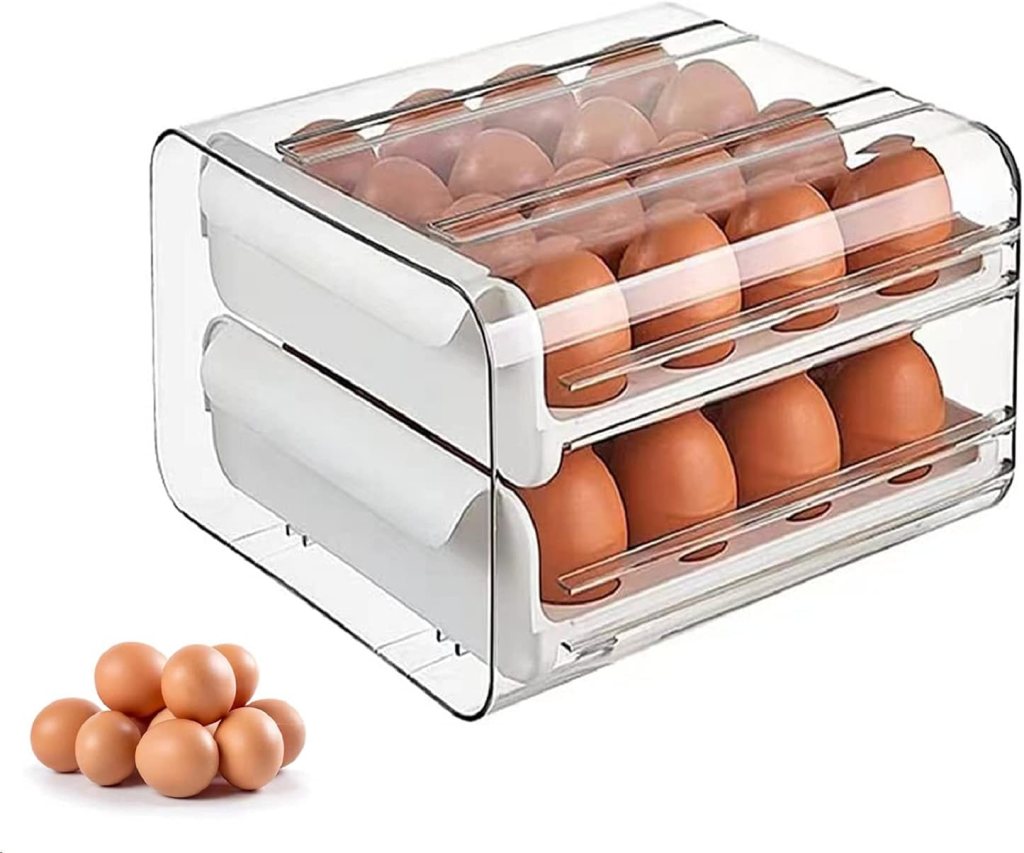
A handy bit of kit!
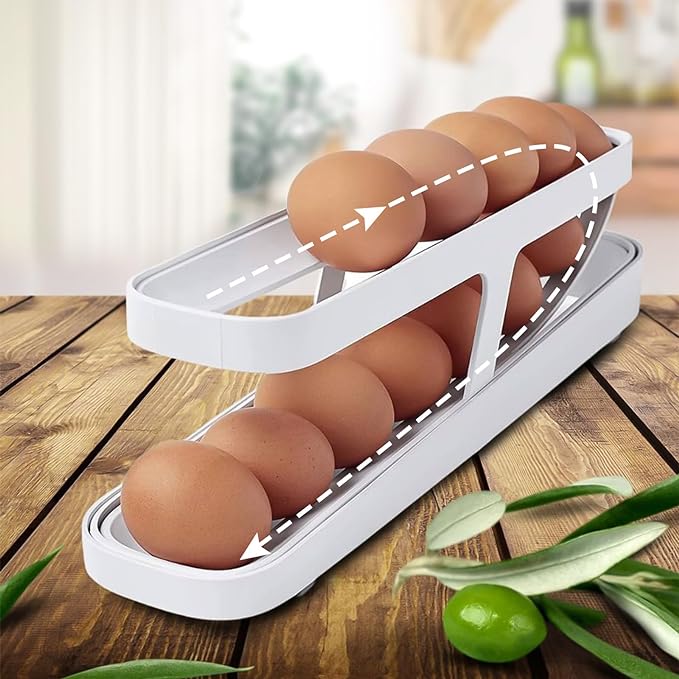
I found these two items whilst perusing the other day and have already ordered one – perfect for when the fridge door is full of fresh eggs, these both provide a practical solution to a glut of eggs.
The first one even keeps them in order so you don’t have to remember which eggs to use next!
En savoir plus sur Maman Poule
Abonnez-vous pour recevoir les derniers articles par e-mail.
 Maman Poule
Une réflexion sur “Best practices for storing fresh eggs”