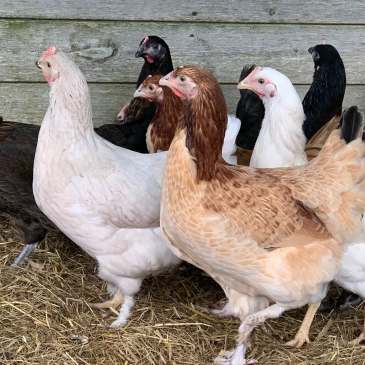
Point of lay pullet – is she ready to lay?

A short but handy article this week! A very regular question that comes up, especially in Spring and Autumn, is « when will my pullets start laying eggs »? What is a point-of-lay pullet? A point-of-lay pullet is a female chicken that is fully grown and is about to start laying her first eggs. Honest sellers will … Lire la suite Point of lay pullet – is she ready to lay?

Bumblefoot

Usually in the form of a scab on the sole of the foot in the centre, this can be caused by jumping off a high perch onto hard ground on a regular basis.  Symptoms can be nothing at all to favouring one leg or limping. Treatment is straight forward but takes some time to recover. … Lire la suite Bumblefoot

Why Chickens Roost Outside and How to Prevent It

As a chicken keeper, you will certainly have noticed that your flock has character, especially as individuals but as a group too!  One problem you may have had the pleasure of experiencing is hens roosting in the nest box, or perhaps even on top of the henhouse.  This is especially noticeable when they first arrive … Lire la suite Why Chickens Roost Outside and How to Prevent It

Cockerels: Care Tips for Backyard Chicken Owners

It is widely believed that you need a cockerel (male chicken) so that the hens lay eggs.  This is not the case.  Hens will continue to lay eggs in the absences of cockerels and will even be in better general health!  So why keep a cockerel? Whilst unnecessary for egg production, cockerels nonetheless do play … Lire la suite Cockerels: Care Tips for Backyard Chicken Owners

Water hygiene

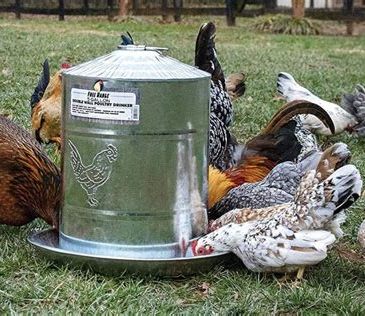
The saying “water is life” is very true, especially when it comes to your hens’ health.  A simple daily routine can save problems later on. Clean, fresh water is equally important in the winter as it is in the summer.  The drinkers (for there should always be at least 2, even for 3 hens, to … Lire la suite Water hygiene

Comment reconnaître un œuf fécondé et le mirer

Vers le 7e jour de couvaison, vous pouvez commencer à vous demander si vous souhaitez mirer les œufs ou si vous préférez les laisser reposer en attendant le grand jour. J’ai toujours préféré mirer les œufs afin de pouvoir retirer tous les œufs non viables – cela permet également d’éviter les mauvaises surprises « explosif » … Lire la suite Comment reconnaître un œuf fécondé et le mirer