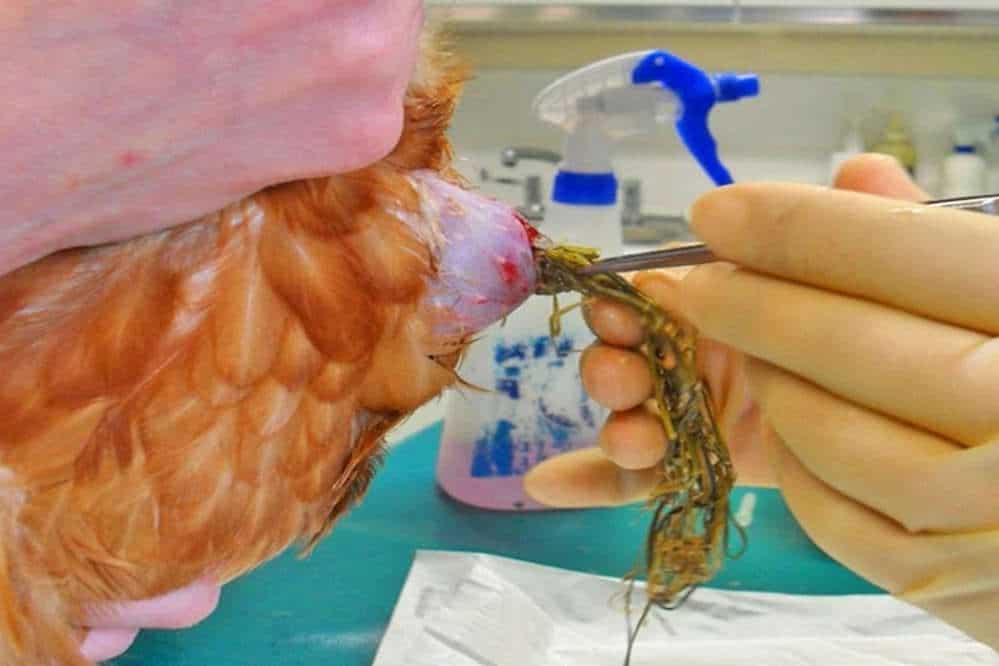
Chickens are omnivores, not herbivores despite what people think. Chickens will eat meat just as happily as vegetables, including tastey snacks like frogs, worms, flies grubs and even snails. Their crop allows for this flexibility, as it acts like a masher…think of the crop as having teeth that grinds up any foodstuff that enters it.
Throughout a chicken’s day, he/she will pick up not only edible foodstuffs but also tiny pieces of stone, sand, broken bits of shell and so on. If you supply crushed oyster shell it serves a double purpose as it also provides a source of calcium. These particles play a very important part of the chicken’s digestive system as without it, harder food particles including grain would not be able to be digested properly.
Make sure that the food is fresh and not mouldy, which can lead to potentially serious issues with the crop.
Meat
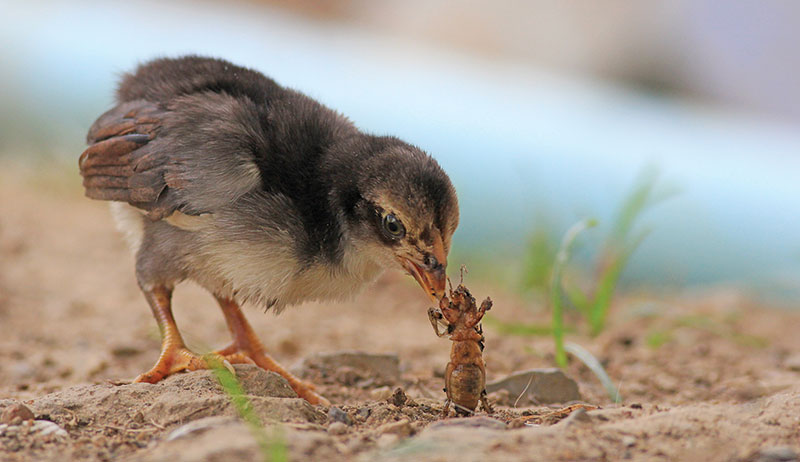
Amongst popular meat-based food for chickens, the top one has to be flies. They love the chase and gobble them up when they can. I would also have said worms except that mine always ran away from worms whenever I threw them some! Perhaps they weren’t the right size? Here in France they readily find frogs and eggs buried in the ground from snakes, which make a particularly good delicacy!
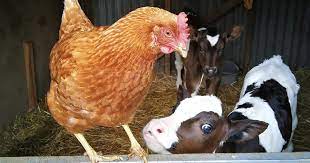
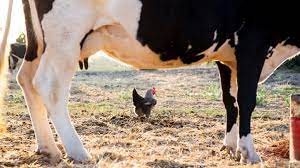
Whilst on the subject of meat, it is good to note that it is not a good idea to feed meat from the kitchen to your chickens. Chunks of steak are not their natural meat source so far as I am aware, but perhaps where you live chickens do descend on herds of cattle and eat them?! The image in my mind’s eye is amusing though!
Joking apart, common sense plays a part too here – raw meat will encourage flies and the problems that come with them, right down to maggot infestations. The rotting meat will also attract rats and encourage sickness and disease in the flock.
Feeding left over cooked meat is also undesirable for the aforementioned reasons. If you decide to do it, just make sure that its all gone that same day.
I believe it goes without saying that of all the meats out there, DO NOT feed chicken meat to chickens. They will eat it and even enjoy it, but feeding their own back to them can lead to serious problems such as E Coli or Salmonella. You could argue that yes, they are cannibals when given a chance, but that doesn’t make it right. To my mind it is immoral. Would you eat your neighbour or a passer-by ? I wouldn’t, even if they did taste juicy !
Let me know what you think in the comments !
Not-meat
Rather than putting in the title here « vegetables », I have put this as a category for anything that isn’t meat simply because some items aren’t vegetables either. Chickens’ preferred vegetables are brassicas (such as broccoli), pumpkins, cucumber, carrots and peas. They can eat potatoes if they are cooked – fussy, aren’t they?!
When it comes to fruit, anything goes more or less. Tomatoes (which are in fact a fruit), bananas and apples are top of the list with grapes and berries. I always found that citrus fruit is not even on the list, although perhaps your chickens do eat the odd orange here and there?
Grains
A staple diet for chickens is grain as everyone knows. The classic image of a young child throwing down mixed grain or corn to the chooks is well known. They do love grain, each of which has its own merits :
- Sunflower seeds are nice and oily which helps keep their feathers shiny and aids the digestive tract, keeping it working smoothly
- Corn, or maize, is a good filler (like porridge is for us on a cold winter’s morning) – make sure you give it in small amounts. It is a cheap grain to produce and can encourage fat deposits around the internal organs, literally fattening the bird up. We’ll come back to that later !
- Wheat and barley are good for them too, providing the dried husks have been removed.
- Oats provide of energy and heat, the same as it does for horses and us too
Pellets
My preferred method of main feed is pellets, simply because it has everything they need in the way of vitamins and minerals. A good-quality complete feed can help in avoiding so many diet-related problems later on down the line. Issues like thin or soft shelled eggs indicate a lack of calcium, for example.

Kitchen left-overs
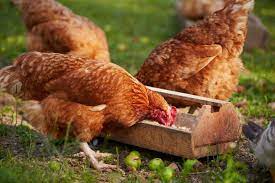
Who needs a dustbin when you have chooks ? We don’t eat a lot of vegetables in our family, but you can rest assured that when we do, the peelings all make their way down the garden to the chickens whilst dinner is on !
As I mentioned before, potatoes are a no-go, but then we never have any left over. You can cook the peelings and give that to them though. Left over roast potatoes and mash go down well.
Left over cooked pasta is much enjoyed by them too, especially spaghetti dangled above their heads by my 5 year old daughter!
Fish
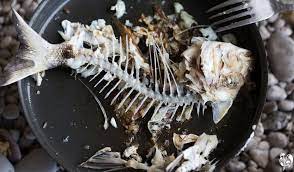
Chickens love fish, bones and all. They really aren’t fussy eaters, its a shame that I don’t like fish!
Bread
You can give small amounts of bread to chickens, providing it is soaked in water first. They enjoy bread but if it is eaten it too greater quantity, it can cause issues with the crop. The same goes for mouldy bread, which can lead to sour crop.
Dairy products
Please do avoid dairy products as it is not part of their natural diet (we’re back to imagining chickens descending on cattle again, although this time on their udders !). Their digestive system is not set up to deal with milk, cheese and butter. When they hatch they do not have milk like a newborn baby.
They do enjoy cheese but personally I would prefer to avoid taking the risk altogether.
I always give the main staple meal in their feeders in the morning first thing (in my case, I opt for pellets). In the late afternoon I like to give each chicken a couple of handfuls of grain so they go to roost with a nice, full crop.
In between the main meal and treat time, comes all the extras we talked about. Banana peelings and apple cores head their way too, then perhaps a bit of left-over mashed potato.
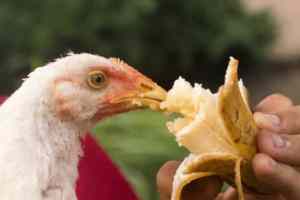
I always try to spread out the goodies though, to ensure they have something « extra » every day. A fat chicken doesn’t lay as many eggs ! Have you ever noticed an eggshell that is wrinkled ? Its caused by excess fat !
Aside from all the above, my birds live on grass so they will graze most of the day. Incidentally, the nice yellow egg yolks come from a rich diet of grass. Corn/maize can also have this effect. Birds kept indoors with no fresh greens, grass or corn will lay eggs with very pale yolks.
Supplements
Thank you for reading :)
En savoir plus sur Maman Poule
Abonnez-vous pour recevoir les derniers articles par e-mail.
 Maman Poule
Chickens are natural scavengers. Their ancestors did eat carcasses. I’m not sure why people think it’s weird for chickens to eat meat. Mine happily clean up game and livestock carcasses. An abundance of any grain can cause sour crop by the way, not just moldy bread.
J’aimeAimé par 1 personne
Hi Ashley – totally agree with everything you’ve said. Its great to hear from other like minded keepers.
Happy Christmas to you and yours
J’aimeJ’aime